
Writing Is Therapy
Featured Voices from the Ditch Life Community

Dave Cummins is a writer from San Diego, California, where he lives with his wife and children. He holds a Bachelor of Arts in English from San Diego State University. His work has appeared in the San Diego Reader, Missionary Stories, and Livina Press. He often writes about growing up in Southern California and shares 90-second versions of these stories on Instagram at @SuburbiaCalling.
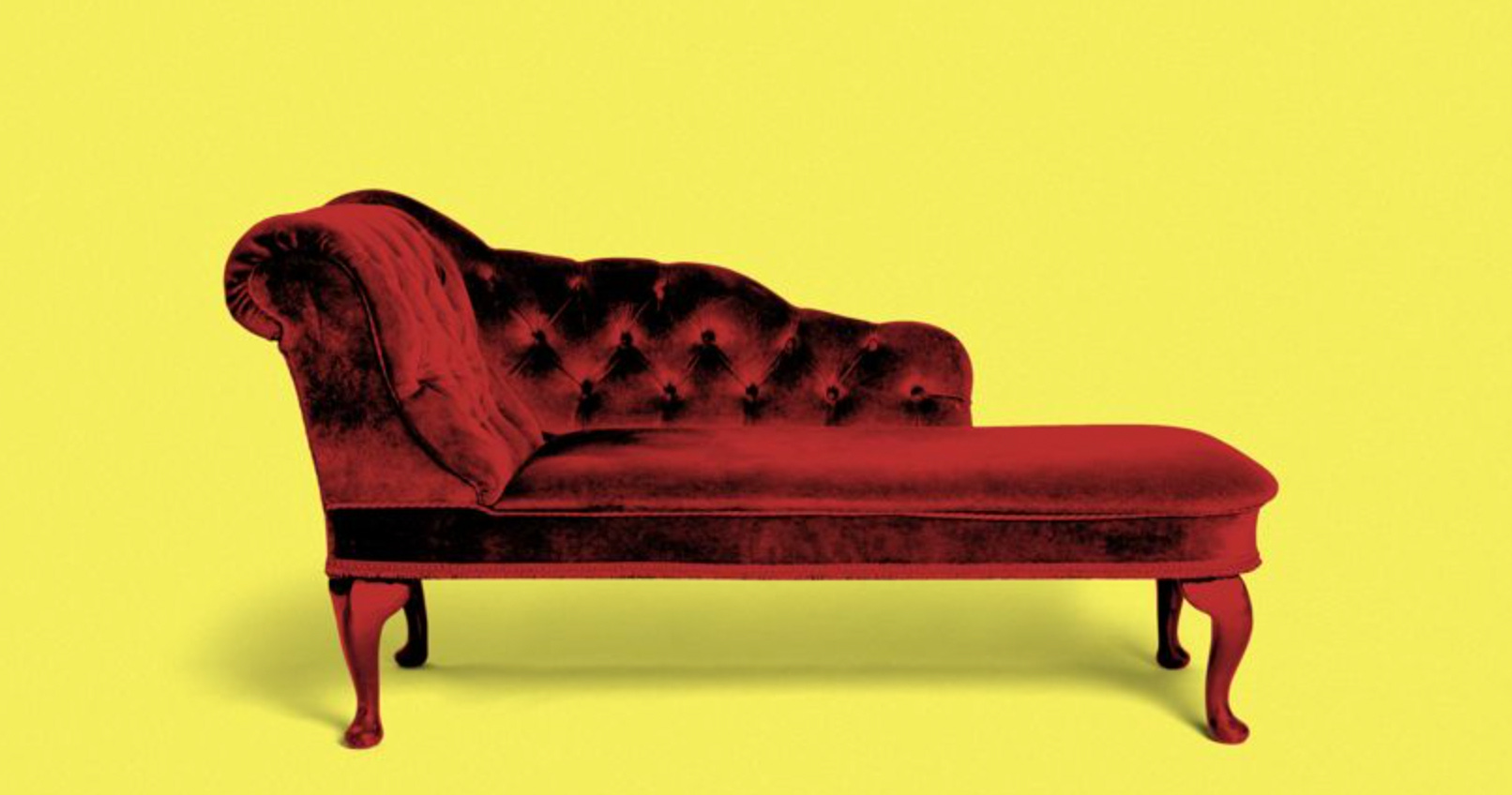
The first time I went to therapy, I felt like a child on the first day of school, full of unknown trepidation. I wasn’t sure if I should lie down on the short couch, feet dangling off the edge, with my eyes on the ceiling or sit up like I was waiting for a physical. I took a seat. As I sat, I wondered if the thoughts coursing through my brain were reflected on my face. The look of bewilderment was partly because I was expecting a woman.
I was expecting a woman, based solely on the fact that the therapist’s name was Erin, but it turned out to be Aaron. Maybe it was a mental Freudian slip, as confessing my deep, dark shortcomings to another man felt uncomfortable. Perhaps my mind had switched the spelling when I called for the appointment.
It’s been ingrained in male DNA that we avoid showing vulnerability to other men. Especially men we just met, and certainly not face-to-face. Any openness we have with each other is almost always done sideways– shoulder to shoulder. So for me, sitting across from someone, facing them, and explaining I need help, felt more natural if that someone was a woman.
I shifted on the sofa. My plan was to have a session or two, figure the rest out on my own, and get out. So, I saw no reason to start over with someone new based on gender. I resisted the thought of leaving.
As we began, Aaron went through a series of questions that could best be described as “get-to-know-yous.” There were questions like:
“How much alcohol are you drinking?”
“Any habitual drug use?”
“Are you thinking of harming yourself?”
“Are you thinking of harming others?”
After I passed those, we got to work. Kind of. It wasn’t a great start. We moved on to questions like, Why was I there? What was bothering me? What did I need help with?
I thought for a minute. I should spill it all. I could simply explain that I feel beaten down with work, but when I am not working, I feel guilty. Or that I’m five years into a midlife crisis and I’m running in place. Maybe that I feel like I have no purpose, and I’m finding it hard to keep my temper in check. The other day, I threw a plate. Instead, I settled with, “I’m having issues with anger?”
I was asking him more than stating, as if he had some telepathic insight into my mind, or maybe I was requesting his permission for that one to suffice. Why couldn’t I just explain it with complete sentences, details, and adverbs? Show, not tell.
As he dug in a little deeper, my mind went blank. We switched back to the get-to-know-yous. We spoke about my family, my wife, and my kids. My job.
“What about you?” He asked. “What do you like to do?”
I couldn’t think of anything.
“Do you have hobbies?”
“Hobbies? I’m 45. I don’t have hobbies.”
“There’s nothing you like to do?”
“Eh. There’s stuff I enjoy… but I’m not down in the garage building ships in a bottle… I don’t have a ‘hobby’”.
“What’s something you used to like to do?”
“I write. Well, when I was younger, I wrote a lot?” again, asking permission for my answer to suffice.
That answer sparked something. We spoke about my old band, writing lyrics, me going back to school after that band imploded, and majoring in English. Then, after graduating— and realizing I would not be a professional writer— I somehow ended up working in finance.
“Here’s what I want you to do,” Aaron added as we neared the end of our 55-minute session. “Write me something for next week. Whatever you want, but write something that tells me more about you.”
It felt like homework. But I agreed. I pictured my school-aged self, sitting at my parents’ kitchen table. The golden-brown woodgrain traversed lengthwise across the bare landscape. All the dinner dishes had been cleared. The fluorescent kitchen light above me lit up the table in an otherwise dark house. It was just me, hunched over a notebook staring at blank college-ruled paper, procrastinating the fact that it was late, and instead of sleeping, I was still putting off doing my schoolwork.
That night, I began writing again. I could justify setting aside work or whatever I felt obligated to do, because I had homework. So I wrote. Over the next week, I wrote and re-wrote and edited, and an hour before my next session (and after carefully making sure no one in my office was using the giant communal printer), I printed out an essay.
Somehow, my frustration, my midlife crisis, the imposter syndrome, and my feeling of being stuck on the work-obsessed hamster wheel I had built for myself, fueling my own anger and vomiting it back onto my family, all started to make sense. It flowed out of me in a way I couldn’t explain in a sterile room to a stranger with a notebook sitting in front of a bunch of books.
That next session, I read it to him. We spoke about it. We dug deeper. We laughed some. Things opened up. He was cracking me. Maybe it was my ego because he said he liked my writing, or maybe because I was able to explain myself, and he understood. Probably both. But we had a minor initial breakthrough that second week.
I don’t remember getting any more official homework again, but I ran with it. I kept writing and bringing in essays, and our sessions became pseudo writer’s workshops for me. Except, instead of critiquing the writing, we were analyzing the writer. I could spill out thoughts, pen to paper (more accurately keyboard to screen). I started taking an actual lunch break to write. I found a hobby. I found my therapy.
Writing (especially my writing) would never replace the expertise and guidance of a trained, licensed therapist, but for me, it opened those doors of perception. It allowed me to explain myself at a time when I couldn’t through conversation, and often explained what I had not even realized. The process gave me permission to be honest, search, and spill everything. When I wrote, it all poured out of me.
Over the next few years, Aaron and I met, and I wrote. He saw me through the death of my father, my brother’s passing, and then my grandmother’s. He talked me through nearly losing my youngest daughter and the celebration when I didn’t. When I started therapy, I had no idea the difficulty the next few years would bring, but I was so grateful I had taken that step to help me through.
Through it all, I kept writing. I wrote obituaries and letters. I wrote essays to explain the pain and loss and anger that were crushing me through those years. Some pieces I brought to our sessions, and others I set aside like a journal without the “Dear Diary” connotation behind it.
At my very first therapist session, Aaron said, “My goal is to make you cry and to make you swear”. I thought it wouldn’t take much to get me there…. I’m so spent. But I’m not going to swear in front of this guy. The years to follow brought tears and F-bombs, beyond surface-level extraction. It was raw intensity coming out into that sterile room and onto my keyboard over the months and years after we met. I wrote them all down; it was the only way to get it all out of me. It was either I write it or stuff it all… and, like a time bomb, wait for the aftermath.
I am not an extroverted person by nature. And I don’t express my thoughts very well, (my poor wife). I tend to process it all internally and never reveal the results or the process. This made therapy difficult as I tried to spill my guts openly and honestly to be helpful for the session, and simultaneously swallow everything I was thinking about sharing.
But when I wrote out the thoughts pulsing through my head down into my fingers and out to the keys, it flowed out of me. Whether it’s verse, fictional characters, or personal narrative, it all originates in my own experiences or in versions of me. The process of writing it down opens up the ability to reconcile my shortcomings or seek help for them through the written word.
It’s not a hobby anymore. Maybe it never was. For me, writing has become more ritual, more habitual, and still therapeutic. Even though I am no longer going to weekly counseling sessions, I still write for that clarity. It’s entered back into me as part of who I am. The creative process of being alone in the quietness, the only sounds are the clack of the keyboard and my mind racing to center me. Instead of every thought, idea, and question aimlessly rattling around in my head looking for a parking spot, the writing releases them and quiets my mind. It’s no longer a regained hobby, but it is still therapy.
 | A guest post by
|